Most people asking about HMRC subsistence rates want one number: how much can we pay someone per day, tax free, without a pile of receipts.
The honest answer is that the headline rates are small, they only cover meals, and the single biggest cost of sending someone away from home, the bed, is not in them at all.
That gap is where budgets go wrong. This guide sets out exactly what the 2026/27 rates are, the conditions attached to them, what sits outside them, and the separate allowances that do cover accommodation.
What are HMRC Subsistence Rates?
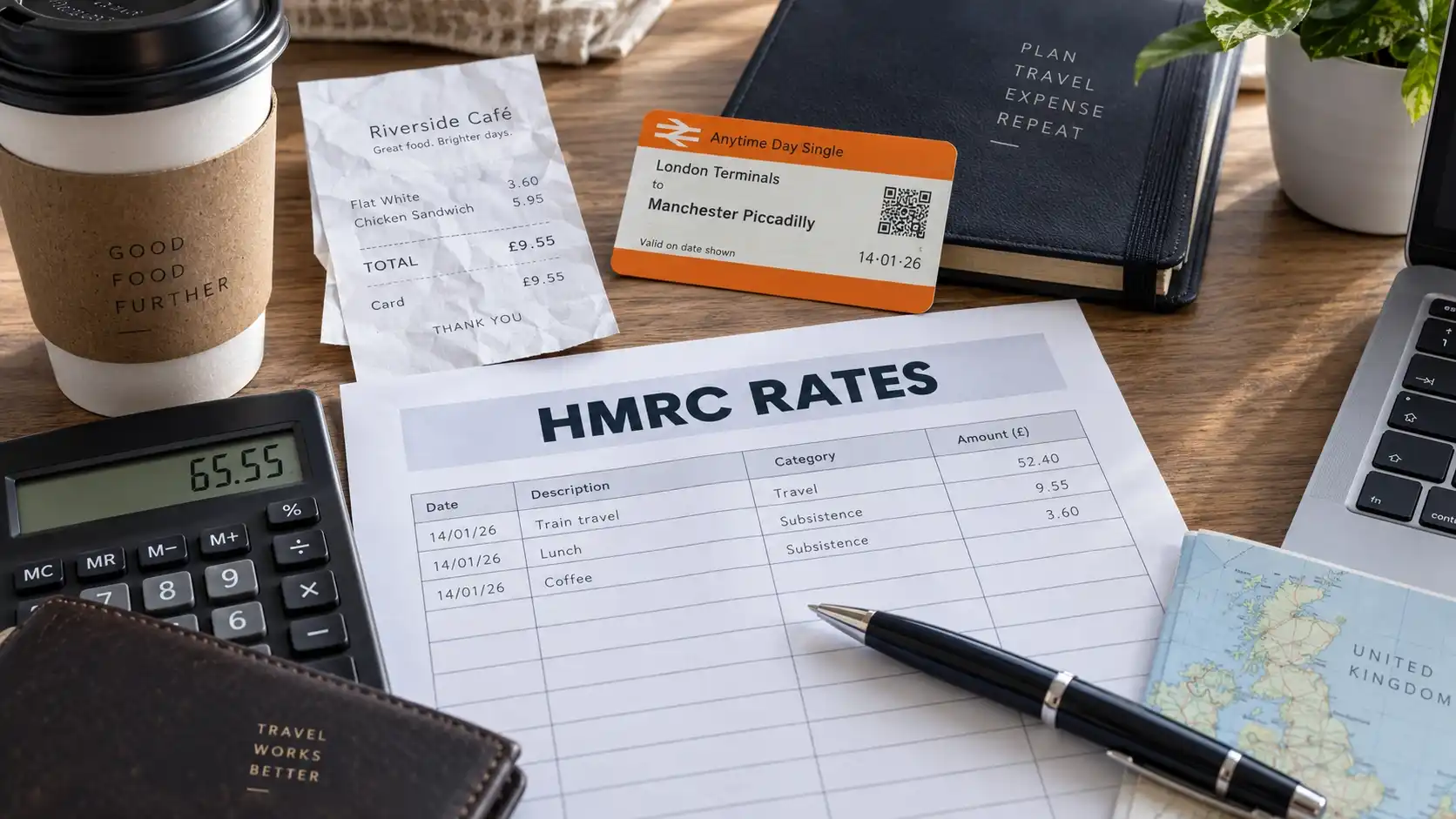
HMRC subsistence rates, formally benchmark scale rates, are fixed amounts an employer can pay or reimburse for meals bought during qualifying business travel, without tax, National Insurance or a P11D entry.
They are a simplification, not a generosity. They exist so finance teams do not have to price every sandwich.
The benchmark scale rates for 2026/27
| Minimum journey time | Maximum tax-free amount |
|---|---|
| 5 hours | £5 |
| 10 hours | £10 |
| 15 hours, and ongoing at 8pm | £25 |
| Late supplement, where a £5 or £10 journey runs past 8pm | £10 extra |
These figures have not moved for years and did not change for 2026/27. A worker on a long day can therefore receive £10 plus the £10 late supplement, or £25 on a 15-hour day, and that is the ceiling for tax-free meal payments under the standard rates.
Pay more than this and the excess is earnings: taxable, NIC-able and reportable, unless you hold a bespoke agreement.
The Three Conditions That Have To Be Met

The rates are not an attendance bonus. All three of the following must hold.
- The travel must qualify. The journey has to be to a temporary workplace, or travel in the performance of duties. Ordinary commuting to a permanent workplace never qualifies, however long the drive is.
- The employee must actually buy a meal. HMRC is explicit that the employee must have incurred a cost on food and drink after the journey began. No meal bought, no tax-free payment, even if the hours are met.
- The employer must have a checking system. Since 6 April 2019 you no longer have to check actual expenditure for benchmark rates, but you do have to check that qualifying travel took place, and keep the evidence.
That 2019 change is the one most often misread. It removed the receipt-checking burden for the employer. It did not remove the requirement for the employee to have spent money, and it did not remove the need for records.
What The Rates Do Not Cover
This is where most of the confusion sits, so here it is plainly.
| Covered by benchmark rates | Not covered |
|---|---|
| Meals bought during qualifying travel | Accommodation of any kind. |
| Food and non-alcoholic drink | Alcohol. |
| A late meal after 8pm, with the supplement | Meals already provided, in a hotel rate, on a train, at a conference or on a course. |
| Meals on the way to a temporary workplace | Food bought before the qualifying journey starts. |
| One reimbursement per meal | A second claim for a meal already reimbursed on an actual basis. |
| Any occasion where no cost was actually incurred. | |
| Ordinary commuting. |
The headline exclusion is accommodation. Benchmark scale rates are a meals mechanism. There is no £X per night in that table, and no version of the benchmark rates that pays for a hotel room or an apartment.
The second most expensive misunderstanding is the double claim. If an evening meal is included in the room rate and reimbursed as part of the accommodation cost, the employee cannot also take the benchmark rate for that meal. HMRC states this directly: an employee can only be reimbursed for a meal once.
So How Does Accommodation Get Reimbursed?

On actual cost, with evidence, and there is no fixed cap.
HMRC’s position in its Employment Income Manual is that a deduction is allowed for the cost of accommodation and any necessary meals where an overnight stay is needed, and that this holds even where the employee stays away for some time. There is no maximum number of nights written into the rule.
Two qualifications matter in practice.
- The cost must not be unduly lavish. HMRC reserves the right to challenge accommodation and subsistence it considers excessive. A suite at a five-star hotel for a site visit invites a question that a serviced apartment does not.
- The workplace must still be temporary. Once the 24-month rule bites, relief stops entirely. More on that below.
Incidental overnight expenses: the small, useful extra
Separate from meals and accommodation, an employer can pay a tax-free amount for the personal odds and ends of a night away:
| Where the employee stays | Tax-free limit per night |
|---|---|
| Inside the UK | £5 |
| Outside the UK | £10 |
This covers things like a newspaper, a phone call home or laundry. It needs no receipts.
The trap is that this exemption is all or nothing. Exceed £5 on a UK night and the whole payment becomes taxable, not just the 50p over. Budget it at exactly the limit, or not at all.
Working Rule Agreement Lodging Allowances: The Construction Exception

If you are placing operatives in the construction or engineering construction industries, this is the part that actually matters, and it is the part most general guides leave out.
Under HMRC-recognised working rule agreements, lodging or overnight subsistence allowances can be paid free of tax at agreed nightly rates that are far larger than anything in the benchmark table.
Current tax-free lodging allowance rates
| Agreement | Rate per night | Effective from |
|---|---|---|
| Construction Industry Joint Council (CIJC) | £53.69 | 20 July 2026 |
| Engineering construction (NAECI) | £53.09 | 4 May 2026 |
For context on how these have moved under the CIJC agreement:
| Period | Rate per night |
|---|---|
| From 20 July 2026 | £53.69 |
| 30 June 2025 to 19 July 2026 | £51.97 |
| 24 June 2024 to 29 June 2025 | £50.65 |
| 25 June 2023 to 23 June 2024 | £49.08 |
| 9 January 2023 to 24 June 2023 | £44.58 |
CIJC tax-free lodging allowance, per night

2023 (Jan)  ████████████████░░░░  £44.58
2023 (Jun)  ██████████████████░░  £49.08
2024        ██████████████████░░  £50.65
2025        ███████████████████░  £51.97
2026        ████████████████████  £53.69
That is a rise of about 20% since January 2023, which is roughly what has happened to accommodation costs over the same period.
The conditions attached
These allowances are not automatic. HMRC’s conditions include:
- The operative must complete and sign an application form certifying eligibility, and the employer must retain it for compliance checks
- The operative must be responsible for maintaining dependants at a permanent home address while incurring lodging costs away from it
- Under some agreements, the operative must have been recruited by an approved method
- Single operatives without qualifying dependants may still qualify, but through a separate procedure
Without the completed form, the lodging allowance is generally taxable. That is a payroll failure, not a tax planning question, and it is exactly what a compliance review looks for.
One more detail on the engineering construction side: the London supplement is taxable and sits outside the tax-free figure above.
What £53.69 a night actually buys
This is the practical use of the number. If the tax-free lodging allowance is the budget, the question becomes what fits inside it.
| Accommodation route | Typical nightly cost per person | Against a £53.69 allowance |
|---|---|---|
| Budget hotel plus parking | £70 to £95 | Over by £16 to £41 a night |
| Mid-range hotel | £100 to £130 | Well over |
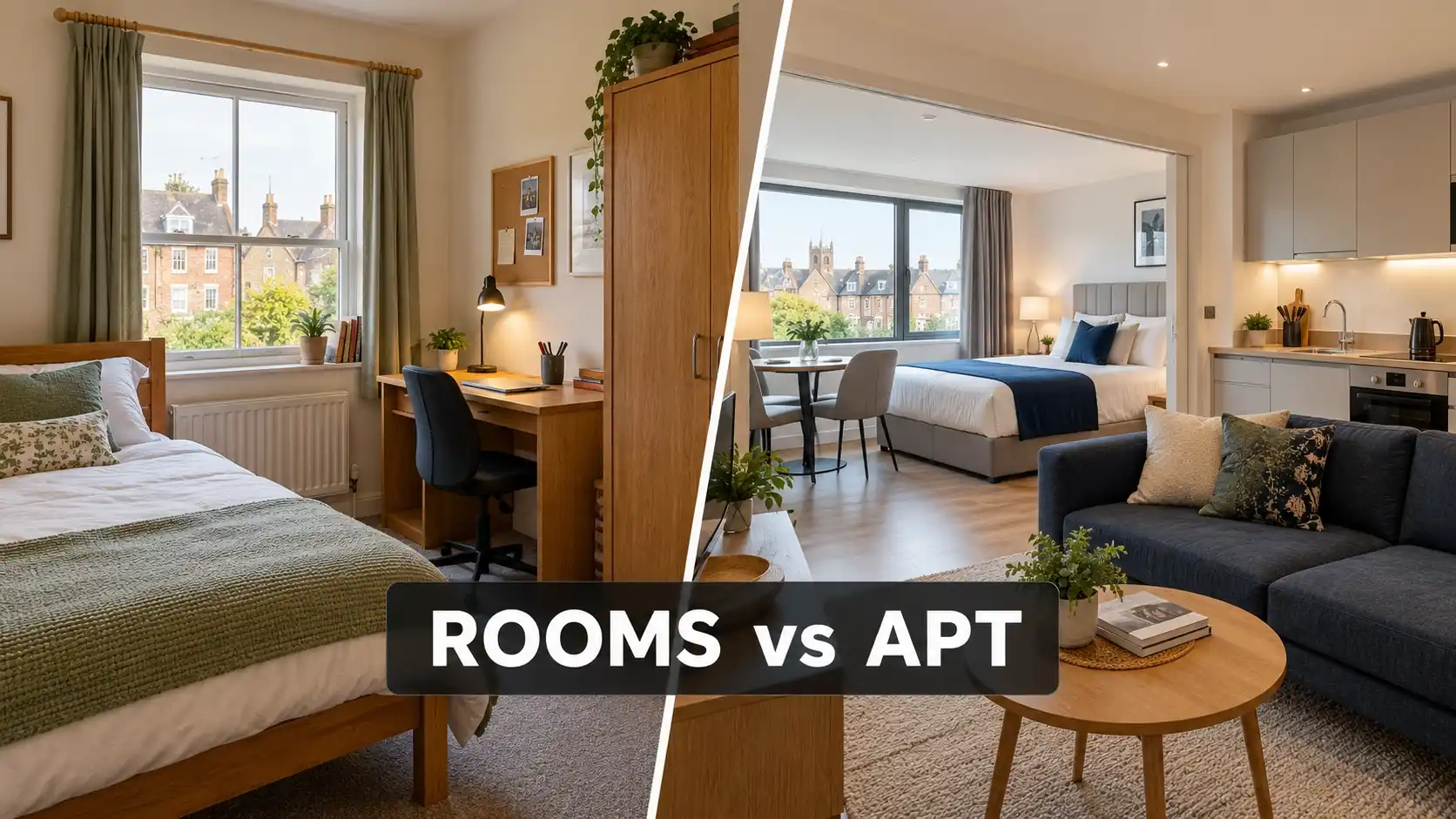
| Room in shared digs | £20 to £27 | Under, but no invoice, no parking |
| Serviced apartment or contractor house, long-stay rate | £25 to £40 | Under by £14 to £29 a night |
Run that across a twelve-week package of 84 nights for one worker:
| Route | Cost over 84 nights | Allowance at £53.69 | Position |
|---|---|---|---|
| Budget hotel at £82 all in | £6,888 | £4,510 | £2,378 short |
| Serviced apartment at £32 | £2,688 | £4,510 | £1,822 of headroom |
The hotel route does not fit the allowance. That is not an argument about comfort, it is arithmetic, and it is why most experienced site managers stopped using hotels beyond the first week. Our guide to what site managers should budget per person per night sets out the regional variation behind those figures, and the per-night comparison of serviced apartments and hotels shows where the crossover sits on shorter stays.
The 24-month rule, which quietly ends all of it
Every relief above depends on the site being a temporary workplace. It stops being one when both of these are true:
- The employee has attended, or expects to attend, for more than 24 months, and
- They spend, or expect to spend, 40% or more of their working time there
The word doing the work is expects. Relief stops from the moment the expectation changes, not from month 25. A worker on an 18-month contract that is extended to 30 months loses relief on the day the extension is agreed, and anything paid after that is taxable.
For anyone running long project packages, that date needs to sit in the payroll calendar, not in somebody’s memory.
Overseas subsistence rates
For travel outside the UK, HMRC publishes country and city scale rates covering room rate, breakfast, lunch, dinner, drinks, hotel to office travel and other costs, with over five hours, over ten hours and 24-hour bands.
These are structurally different from the UK benchmark rates in one important way: they include a room rate. Sydney, for example, carries a 24-hour rate plus a separate room rate, in local currency.
Employers have three options for overseas travel:
- Use the published overseas scale rates
- Apply to HMRC for a bespoke rate
- Reimburse actual vouched expenses
Bespoke scale rates
If the benchmark figures genuinely do not reflect what your people spend, you can agree your own with HMRC.
- Apply for an approval notice, supported by a sampling exercise of actual spend
- An approval notice typically runs for up to five years
- Rates should be set at a modest level, not pitched to cover the highest possible spend
- A checking system is still required, confirming the employee qualified for a deduction, incurred the cost and kept evidence
Bespoke rates suit organisations with high, consistent travel volumes. For a company sending six people to one site for twelve weeks, actual cost reimbursement is simpler and usually better value.
The other 2026/27 numbers worth knowing
Subsistence rarely travels alone on an expenses policy. One figure did change this year.
| Payment | 2026/27 rate |
|---|---|
| Car or van, first 10,000 business miles | 55p (up from 45p on 6 April 2026) |
| Car or van, above 10,000 miles | 25p |
| Motorcycles | 24p |
| Bicycles | 20p |
| Incidental overnight expenses, UK | £5 per night |
| Incidental overnight expenses, overseas | £10 per night |
The mileage increase to 55p from 6 April 2026 is the first change to the first-tier rate in a very long time, and it is worth checking your expenses system has picked it up. Many have not.
The six mistakes that cost employers money
- Treating benchmark rates as a daily allowance. They are payable only where qualifying travel happened and a meal was actually bought.
- Assuming accommodation is included. It is not. Reimburse it on actual cost, or use a working rule lodging allowance where one applies.
- Paying £6 of incidental overnight expenses. The whole amount becomes taxable, not the £1 excess.
- Double-reimbursing a meal that was already inside the room rate.
- Missing the working rule agreement form. No signed form usually means a taxable lodging allowance.
- Ignoring the 24-month expectation test and continuing to pay relief after an extension is agreed.
Where accommodation choice fits into all this
The tax rules push in one direction: the cost has to be real, evidenced, reasonable, and ideally inside a per-night allowance that sits around the £53 mark.
A property with parking, a kitchen and laundry does two things for that arithmetic. It lands under the allowance on the nightly rate, and it removes the meal spend that the benchmark rates only partly cover, because a worker with a kitchen is not buying three meals a day out.
If you are unsure what that kind of property includes as standard, our plain guide to what a serviced apartment is covers the difference between a serviced apartment, a hotel room and a tenancy, including why it is a licence to occupy rather than an assured shorthold tenancy.
Guests House runs apartments and whole houses with parking, full kitchens, laundry and self check-in across Somerset, covering Bridgwater, Highbridge, Taunton and Yeovil, plus Milton Keynes. Around large projects the useful stock goes early, which is the pattern described in our guide to accommodation near Hinkley Point C.
We invoice the company with a PO reference and agreed payment terms, so the accommodation line arrives in a form your finance team can actually process, through our business and extended stay rates.
FAQs
What are the HMRC subsistence rates for 2026/27?
£5 for a qualifying journey over 5 hours, £10 over 10 hours, and £25 for 15 hours or more where the journey is ongoing at 8pm. A £10 supplement can be added to the £5 or £10 rate where the journey runs past 8pm.
Do HMRC subsistence rates cover accommodation?
No. Benchmark scale rates cover meals only. Accommodation is reimbursed on actual cost with evidence, or through a working rule agreement lodging allowance where one applies.
Do you need receipts for HMRC subsistence rates?
Since 6 April 2019 employers do not have to check actual expenditure for benchmark rates, but they must check that qualifying travel took place. The employee must still genuinely incur a cost on a meal, and should keep proof.
What is the tax-free lodging allowance for construction workers?
£53.69 per night under the CIJC working rule agreement from 20 July 2026, and £53.09 per night under the engineering construction agreement from 4 May 2026. Conditions apply, including a signed application form.
What are incidental overnight expenses?
A tax-free payment for personal costs on a night away, capped at £5 per night in the UK and £10 per night overseas. Exceed the limit and the entire payment becomes taxable.
What is the 24-month rule?
A workplace stops being temporary once an employee has attended or expects to attend for more than 24 months while spending 40% or more of their working time there. Travel and subsistence relief stops from the point that expectation arises.
Can you claim subsistence on a normal commute?
No. Travel between home and a permanent workplace is ordinary commuting and never qualifies, regardless of distance or hours.
What is the HMRC mileage rate for 2026/27?
55p per mile for the first 10,000 business miles in a car or van from 6 April 2026, up from 45p, then 25p per mile above that. Motorcycles are 24p and bicycles 20p.
Can an employer pay more than the benchmark rates?
Yes, but the excess is taxable and NIC-able unless the employer holds a bespoke scale rate approval notice from HMRC, which usually runs for up to five years and requires a sampling exercise.