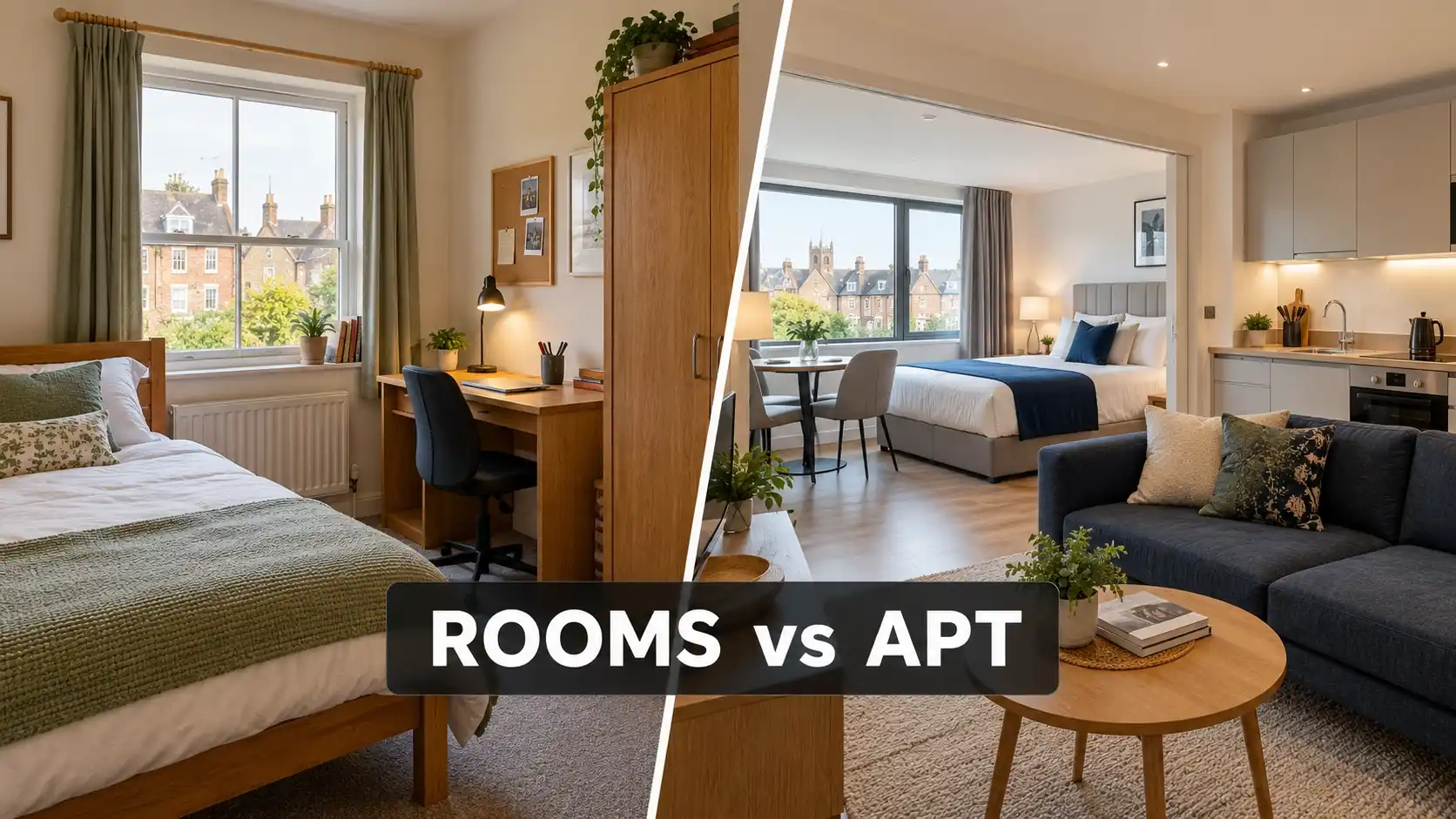
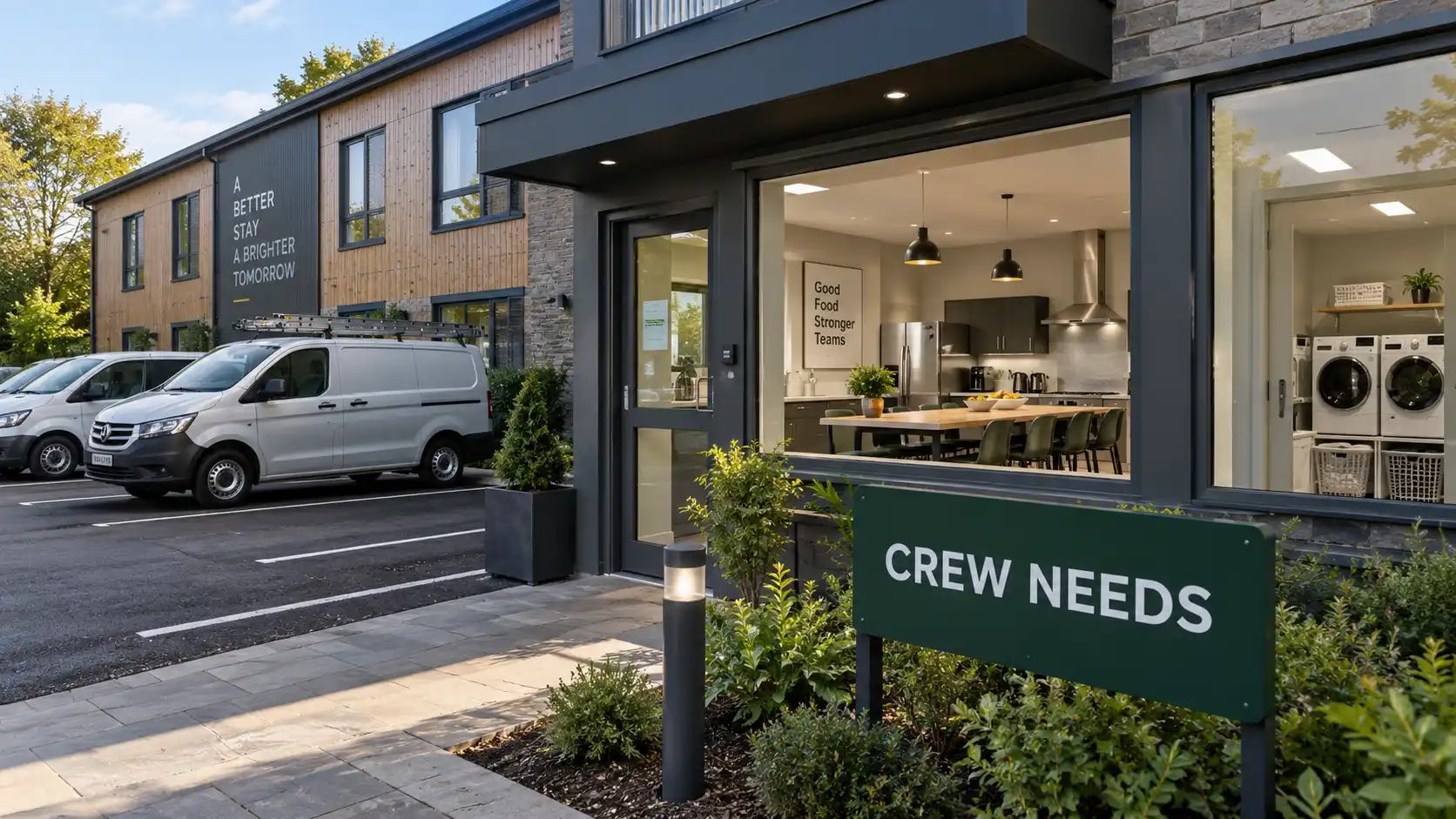
The bed is the cheapest part of what a shift worker needs.
A 12-hour shift, six days a week, means arriving back at 8pm with wet workwear, an empty stomach, a van full of tools and eight hours before the alarm goes again. What the accommodation does in those hours decides whether the person turns up sharp on day 30 or hands their notice in on day 12.
Three things carry most of that weight: parking, a kitchen and laundry. Everything else is detail. Here is what each one is actually worth, in numbers.
What does workers accommodation need to provide?
Judge any property against how the shift runs, not how the photos look.
| Feature | Why it matters on long shifts | What to ask before booking |
|---|---|---|
| Off-street parking | Tools stay with the van overnight | How many spaces per property, is it gated or lit. |
| Full kitchen | Meals at 9pm, food cost cut by two thirds | Oven, hob, full-size fridge, freezer. |
| Washing machine | Workwear washed on site, no launderette trips | In the property or shared, is a dryer included. |
| Drying space | Wet kit dry by the next shift | Radiators, airer, heated rail, ventilation. |
| Blackout and quiet | Day sleep for night crews | Blackout blinds, room away from the road. |
| Self check-in | 10pm arrivals after a delayed shift | Keysafe or smart lock, no reception hours. |
| Reliable wifi | Timesheets, inductions, calls home | Actual speed, not “wifi included” |
| Company invoicing | Finance can pay it without a personal card | Invoice, PO reference, payment terms. |
Score a property out of eight on that list. Anything under six will generate phone calls later.
Why parking is the first thing to check
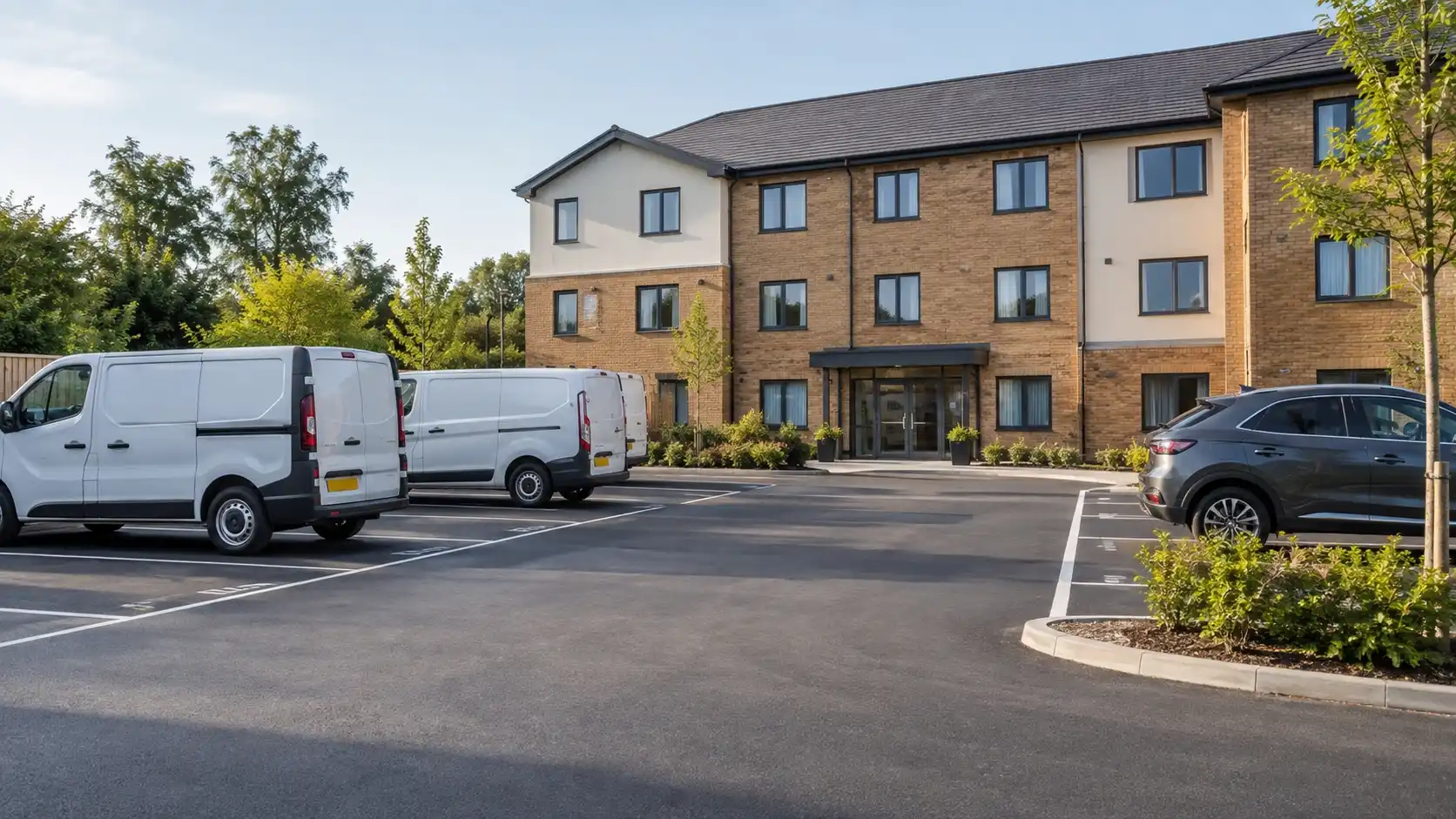
For anyone arriving in a van, parking is not a convenience. It is where several thousand pounds of tools spends the night.
The 2026 numbers are hard to ignore:
- 51% of tradespeople have had tools stolen
- 94% never get them back
- The average claim is £2,646, up 24% since 2020
- UK tradespeople lost around £99 million to tool theft in 2025
- 77% say the theft affected their mental health
Whole-van theft has fallen sharply as immobilisers improved. What replaced it is worse for anyone parked on a street: forced doors and “peel and steal” attacks on the van body, which cost the owner a repair as well as the tools.
What good parking looks like
- Off-street, on the property, not a permit bay two roads away
- One space per vehicle, confirmed in writing before arrival, not “parking nearby”
- Lit and overlooked, ideally visible from the property itself
- Room to reverse in, so the van’s rear doors sit against a wall
- No permit zone, or permits supplied, because a £70 penalty notice on night three sours the whole stay
Hotels commonly charge £10 to £25 a night for parking on top of the room, and rarely offer anything more secure than an open car park. Over a twelve-week package that is £840 to £2,100 per vehicle for a space no better than the street.
What is a kitchen actually worth?
More than most people assume, because it changes three costs at once: food, time and how well someone eats before a night shift.
Current UK meal costs:
| Meal source | Typical cost | Per week (7 days) |
|---|---|---|
| Home-cooked or batch-cooked meal | £1.50 to £3.00 | £11 to £21 |
| Supermarket meal deal | £3.50 to £5.00 | £25 to £35 |
| Takeaway or pub meal | £8.00 to £15.00 | £56 to £105 |
A worker with no kitchen eats from the second and third rows. A worker with a kitchen eats from the first. On a twelve-week package the gap runs to well over £1,500 per person.
The time argument matters just as much on a long shift:
- A kitchen means eating at 9pm. Most hotel kitchens and half the local takeaways have stopped serving by then
- A freezer means batch cooking on the day off, so there are six evening meals ready and no decision to make at the end of a shift
- A full-size fridge means a proper shop, not a daily trip for whatever is left in the meal deal fridge
- A packed lunch beats a garage sandwich on a site with no canteen, which is most sites
What counts as a real kitchen: an oven and hob, a full-size fridge with a freezer compartment, a microwave, a kettle and enough pans and plates for the number of people sleeping there. A kitchenette with two hobs and a bar fridge does not do the job for a crew of four.
Laundry, drying and the workwear problem

This is the feature people forget at booking and complain about by day four.
High-vis, work trousers and socks after a 12-hour shift cannot wait until the weekend. Without a machine on site, the options are a launderette trip on a day off or a service wash, and 2026 prices are not trivial:
| Laundry route | Cost per load | Notes |
|---|---|---|
| Washing machine in the property | About 26p | 12p electricity, 14p water |
| Launderette, self service (8kg) | £5 to £8 | Plus £2 to £3 to dry |
| Full launderette visit, wash and dry | £8 to £14 | Typical UK visit |
| Service wash, drop off | £15 to £25 per bag or £1.50 to £2.50 per kg | London runs 15 to 20% higher |
Two launderette visits a week is £16 to £28, plus an hour of a rest day each time. A machine in the property is under £1 a week and runs while the worker sleeps.
Drying is the half of this that nobody quotes for. Wet workwear needs somewhere to hang overnight, or it goes back on damp. A property that works for shift crews has a utility area, a radiator or heated rail, an airer, and ventilation so the whole house does not end up smelling of drying kit. A tumble dryer is a bonus rather than a requirement, as long as there is warm, ventilated space.
Ask directly whether workwear is allowed in the machines. Some short-let properties say no, which makes the machine useless for the one thing your crew needs it for.
Sleep, shifts and the parts of the property that affect safety
The Health and Safety Executive treats fatigue as a workplace hazard requiring risk assessment, not a personal problem. Its guidance is blunt about the cause: fatigue is a decline in mental and physical performance from prolonged exertion, sleep loss or a disrupted body clock, and it shows up as slower reactions, memory lapses and worse risk judgement.
The scale is worth quoting to anyone who thinks accommodation quality is a comfort issue:
- Fatigue is implicated in around 20% of major road accidents
- It costs the UK an estimated £115 million to £240 million a year in workplace accidents alone
- More than 3.5 million people in the UK work shifts
HSE also makes the specific point that matters for night crews: day sleep is lighter, shorter and more easily disturbed than night sleep, because of daylight and daytime noise.
That turns four ordinary property features into safety features:
- Blackout blinds or curtains, not thin bedroom curtains
- A bedroom away from the main road, and away from the front door of a shared house
- A house rule on quiet hours when day and night shifts share a property
- Mid-week linen and towel changes, so nobody loses a sleep window to housekeeping at 10am
If you are booking for a mixed crew, split them by shift pattern across properties rather than mixing days and nights under one roof. It costs nothing and removes the most common complaint in shared worker accommodation.
The details that decide whether a stay works
None of these appear on a rate sheet.
- Self check-in. A shift that overruns should not mean a locked door. Keysafe or smart lock, with the code sent ahead
- Wifi that actually works. Timesheets, e-learning inductions, video calls home. Ask for a speed figure, not a tick box
- Somewhere to put boots. A hallway or porch where site boots come off keeps the property usable for the next crew and protects your deposit
- Storage for kit. A locked garage or shed is worth real money against the tool theft numbers above
- Heating you control. A crew coming in wet at 8pm needs to be able to turn the heating on, not wait for a timer
- One invoice, one contact. Company invoicing with a PO reference, and a single number to call when the boiler stops
What the whole package costs per person, per week
Indicative figures for one worker on a six-day, 12-hour pattern in a regional UK location.
| Cost line | Hotel route | Managed apartment or contractor house |
|---|---|---|
| Bed | £490 (£70 x 7) | £210 (£30 x 7, long-stay rate) |
| Parking | £84 (£12 x 7) | Included |
| Breakfast | £35 | In the grocery shop |
| Evening meals | £77 (takeaway or pub) | In the grocery shop |
| Lunches | £27 (meal deals) | In the grocery shop |
| Groceries | Not usable | £45 |
| Laundry | £22 (two launderette visits) | About £2 |
| Weekly total | ~£735 | ~£257 |
Cost per worker per week, all in

Managed apartment or house   ███████░░░░░░░░░░░░░   ~£257
Hotel route                  ████████████████████   ~£735
Roughly £478 a week per person, or about £5,700 per person across a twelve-week package. For a crew of six that is a difference of over £34,000, and the cheaper option is the one where people sleep better and eat properly.
Rates vary by region and season, so treat these as the shape of the gap rather than a quote. Our guide to what site managers should budget per person per night breaks the bed cost down properly by area, and the per-night comparison of serviced apartments and hotels shows where the crossover point sits for shorter stays.
The booking checklist
Ten questions, asked before you commit. Any operator who cannot answer them quickly is telling you something.
- How many parking spaces come with the property, and are they off-street?
- Is the parking lit, gated or overlooked?
- Is there an oven, hob, full-size fridge and freezer?
- Is there a washing machine in the property, and is workwear allowed in it?
- Where does wet kit dry, and is there ventilation?
- Are there blackout blinds in the bedrooms?
- How does check-in work after 9pm?
- What is the actual wifi speed?
- How often is linen changed on a long stay, and at what time of day?
- Do you invoice the company with a PO reference, and on what payment terms?
Ask them in an email so the answers are in writing. It takes five minutes and it is the difference between a package that runs quietly and one that generates a call every week.
How we set our properties up
Guests House runs apartments and whole houses built around exactly this list: parking on the property, full kitchens, washing machines and drying space, self check-in for late arrivals, and company invoicing on extended stays.
We cover Bridgwater, Highbridge, Taunton and Yeovil across Somerset, plus Milton Keynes, with properties from one-beds up to five-bedroom houses sleeping ten. Around major projects the useful stock goes early, which is the pattern we describe in our guide to accommodation near Hinkley Point C.
If you are not sure what a serviced apartment includes as standard, our plain guide to what a serviced apartment is covers it, and longer bookings run on our business and extended stay rates.
Send a postcode, dates and headcount and we will tell you straight whether we can cover it.
FAQs
What is workers accommodation?
Short to medium-term housing for people working away from home, usually contractors, engineers and site crews. It ranges from a room in a shared house to a whole serviced property with parking, a kitchen and laundry.
Why does parking matter so much for contractor accommodation?
Because tools stay in the van overnight. Around 51% of UK tradespeople have had tools stolen, the average claim is £2,646, and 94% never recover them. Off-street, lit parking is the single cheapest control available.
How much does a kitchen save on a long stay?
A home-cooked meal costs £1.50 to £3.00 against £3.50 to £5.00 for a meal deal and £8.00 to £15.00 for a takeaway. Over twelve weeks that is well over £1,500 per person.
Is a washing machine really worth paying for?
Yes. A wash at home costs about 26p. A full launderette visit costs £8 to £14 and takes an hour of a rest day, and a service wash runs £15 to £25 a bag.
What does night shift accommodation need?
Blackout blinds, a bedroom away from road noise, agreed quiet hours, and linen changes scheduled outside sleep windows. HSE notes that day sleep is lighter and more easily disturbed than night sleep.
Can workers dry wet workwear in serviced accommodation?
In properties set up for crews, yes, using a utility area, heated rail or airer with ventilation. Check the drying arrangement and whether workwear is permitted in the machines before booking.
Who pays for workers accommodation, the company or the worker?
Usually the company, which is why invoicing matters. Ask for a company invoice with a PO reference and agreed payment terms rather than a personal card at check-in.
How many spaces should I ask for?
One per vehicle, confirmed in writing. A five-bedroom house with two spaces will not work for five people who each drive a van.