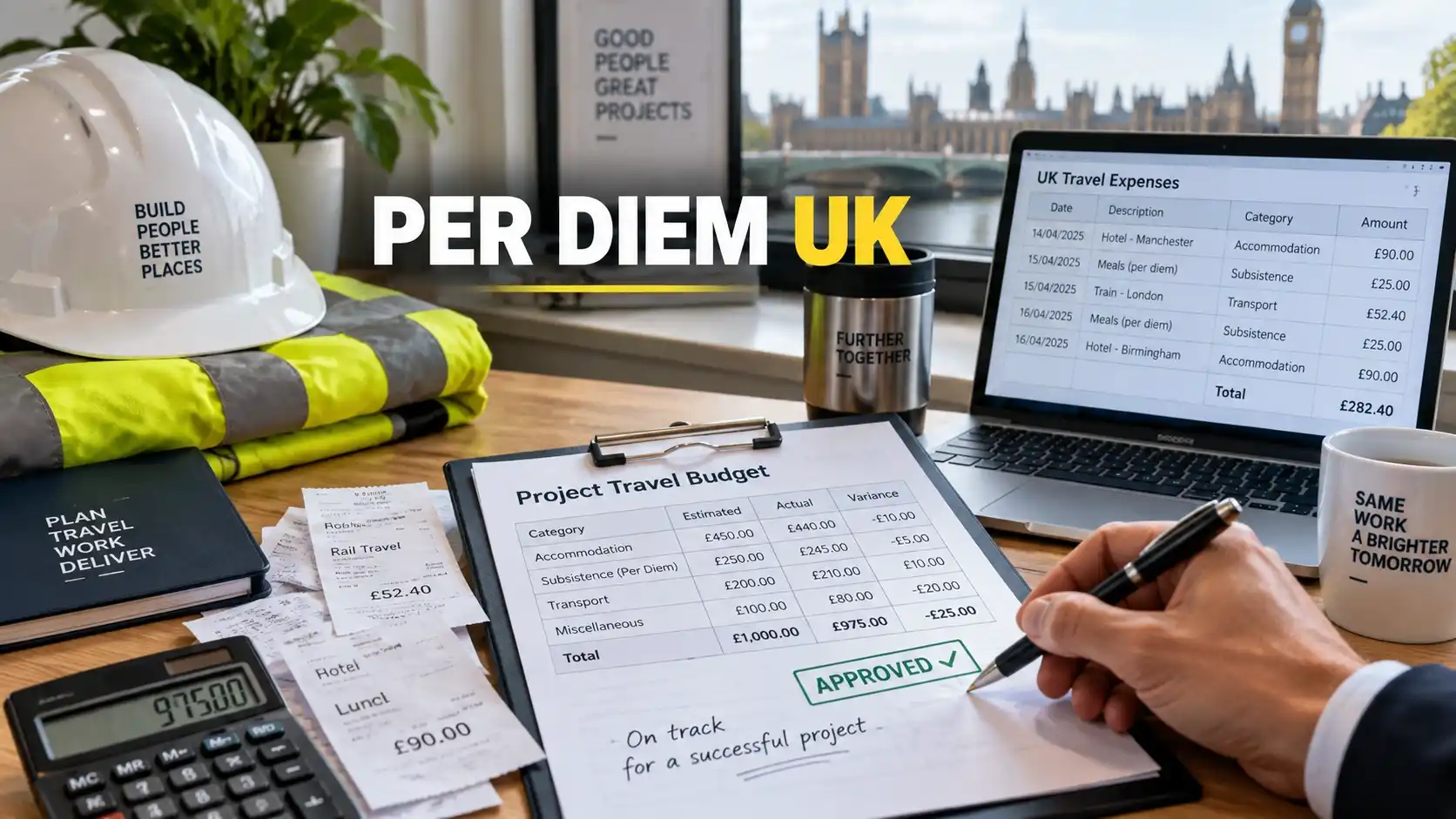
There is no official UK per diem for accommodation. HMRC publishes small meal rates, a £5 allowance for overnight incidentals and a construction lodging allowance of £53.69 a night. For almost every other business trip in the UK, the room is paid at actual cost, and your own policy sets the ceiling.
That is why accommodation budgets get sent back. The meal figures come from HMRC. The biggest cost, the bed, usually comes from a guess.
This guide shows how to build the accommodation part of a UK per diem so it holds up with finance: which HMRC figures to use, how to set a per-night cap, a worked six-week example, and the checklist a finance team works through before it approves spend.
Is there an official per diem rate in the UK?
Not in the way the US has one. The UK has no single daily figure covering bed, meals and incidentals for domestic travel. It has several separate tools, and each covers a different part of the cost.
| UK mechanism | What it covers | Rate | Covers the bed? |
|---|---|---|---|
| Benchmark scale rates | Meals on qualifying journeys | £5 (5 hrs), £10 (10 hrs), £25 (15 hrs and ongoing at 8pm), plus a £10 late supplement | No |
| Incidental overnight expenses | Personal costs on a night away | £5 a night in the UK, £10 overseas | No |
| Overseas scale rates | Room, meals and local travel abroad | Set by country and city | Yes, but outside the UK only |
| Working rule agreement lodging allowance | Construction operatives living away from home | £53.69 a night (CIJC, from 20 July 2026) | Yes, with conditions |
| Bespoke scale rate | Whatever HMRC approves for your organisation | Agreed through an approval notice lasting up to 5 years | Only if approved |
| Actual cost | Anything properly incurred on qualifying travel | Whatever it costs, as long as it isn’t lavish | Yes |
For most UK employers, the accommodation part of a per diem is actual cost up to a limit you set yourself. HMRC controls whether a payment is tax-free. Your policy controls how much is paid.
If you want the detail behind the meal figures, including the three conditions and the 2019 change to receipt checking, our guide to HMRC subsistence rates for 2026/27 goes through them line by line.
Why a flat daily allowance is usually the wrong tool
Many finance teams picture a per diem as a fixed cash sum paid each day. In the UK, that is usually the most expensive way to do it.
HMRC’s guidance is clear. A round sum allowance, paid whatever the employee actually spends, counts as earnings. The full amount goes through PAYE. Class 1 National Insurance is due on the amount, minus any specific business expenses it covers.
| How the money moves | Tax and NIC position | Admin | Main risk |
|---|---|---|---|
| Flat daily cash sum to the employee | Taxable earnings through payroll | Low | Paying tax and NIC on a travel cost |
| Benchmark meal rates | Tax-free if the conditions are met | Low | Paying rates when the travel didn’t qualify |
| Reimbursed actual cost, with receipts | Tax-free where the cost is deductible | High volume of claims | Late, missing or lavish claims |
| WRA lodging allowance | Tax-free at the agreed rate | A signed form for each operative | Missing forms make it taxable |
| Company-booked, invoiced to the company | Covered by the same exemption where the travel qualifies | One invoice, one PO | Needs a policy cap to hold spend down |
The cleanest setup for accommodation is the last row. The company books the property, the provider invoices the company, and the employee never pays for the room or claims it back. Meals then run through benchmark rates or actual receipts.
Why the accommodation line is where budgets break
The numbers are lopsided. On a long working day HMRC’s meal figures total £25. The room behind it can cost four or five times that.
VisitBritain’s latest hotel survey put the average daily rate for England outside London at £113 in July 2026, with occupancy at 84%. That is an average across the month. Rates near a big project, during an event or on a Tuesday night in a busy town can sit well above it.
Two things follow:
- A policy with no accommodation cap isn’t a policy. Finance can’t approve a number it can’t forecast.
- A cap copied from hotel rates alone rewards the most expensive option. If the limit is £120, bookings drift up to £120.
The answer is to set the cap by length of stay as well as location.
How do you set a per-night accommodation cap?
Split the policy into short trips and long stays. They are different purchases, and pricing them the same way is where most budgets go wrong.
| Stay type | Location | Suggested cap per person per night | Why |
|---|---|---|---|
| 1 to 6 nights | Regional England | £100 to £120 | Brackets the £113 regional hotel average |
| 1 to 6 nights | London | Set from live quotes | Hotel rates vary too much for one number |
| 7+ nights | Regional towns | £25 to £35 | Shared house or apartment with a kitchen |
| 7+ nights | Major cities | £30 to £45 | More supply, more competition |
| 7+ nights | London | £45 to £70 | Zone 3–4 studio up to a zone 2 house share |
| Construction operatives on a WRA | Anywhere | £53.69 | Matches the tax-free lodging allowance |
The long-stay ranges come from our breakdown of what to budget per night for contractor accommodation, which covers the regional differences and the extras that push a quote up.
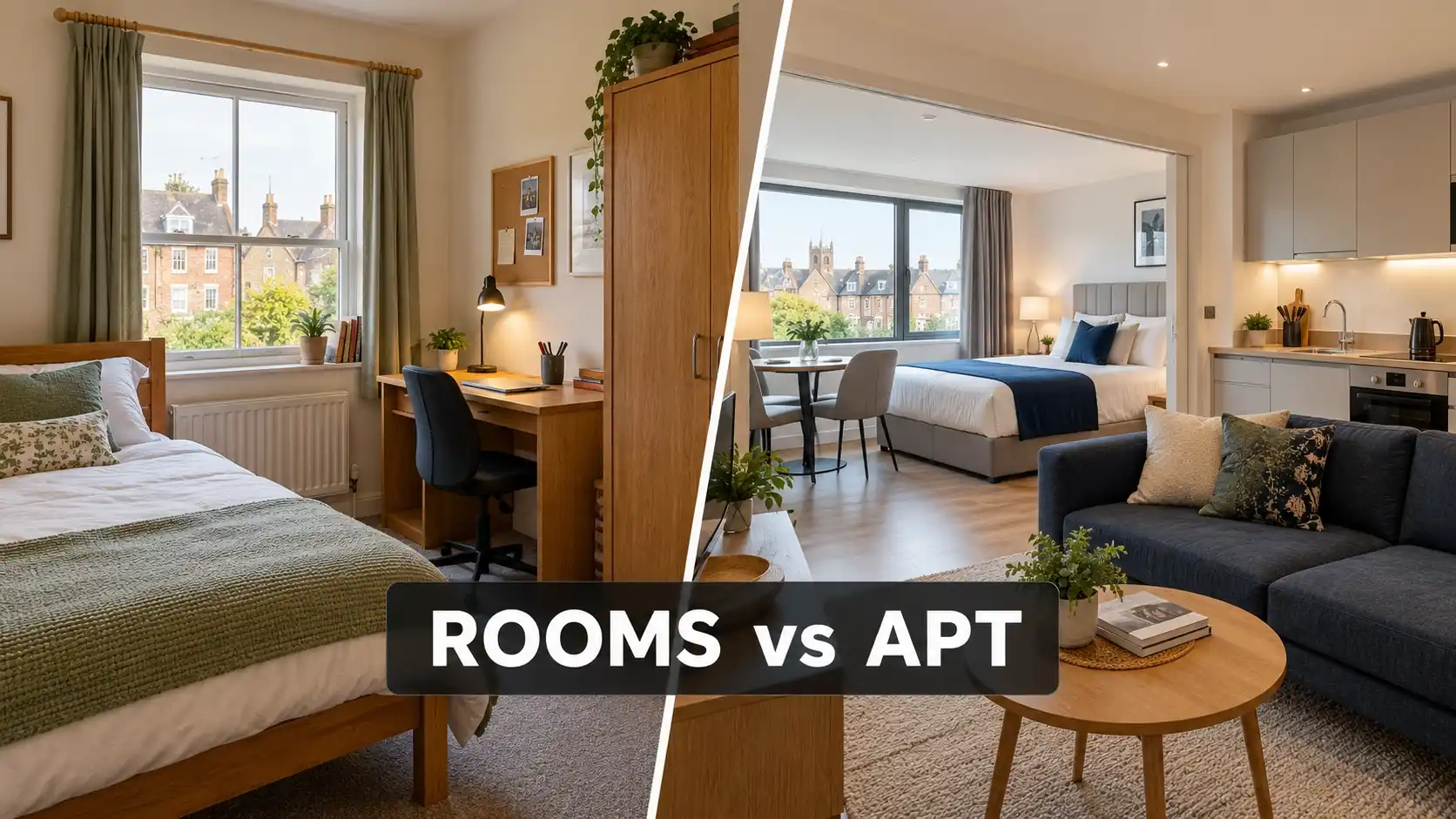
The logic is simple. Past the first week, a hotel room is the wrong product at the wrong price. The per-night cost comparison of serviced apartments and hotels shows where the crossover usually falls.
The five lines of a per diem budget
A per diem that gets approved is built from lines finance can check, not one total. Five lines cover almost every UK trip.
1. Accommodation
The nightly rate, fully inclusive. Bills, Wi-Fi, cleaning and linen should all be inside it. A £28 quote that bills cleaning separately is not cheaper than a £32 quote that includes it.
2. Parking
In a town centre hotel, often £8 to £15 a night. Outside city centres, it should be free and on site. If it isn’t, that’s a warning sign on any contractor booking.
3. Meals
This is where the property type makes the biggest difference. With no kitchen, a traveller eats out three times a day. With a kitchen, they don’t. In our comparison, the gap is about £27 per person per day.
4. Incidentals
Budget exactly £5 a night for UK stays, or nothing. The exemption is all or nothing: pay £6 and the whole payment becomes taxable.
5. Travel
Mileage is 55p a mile for the first 10,000 business miles in 2026/27, up from 45p, then 25p. At 55p, a £35 bed costs less than a 64-mile round trip. Past about 32 miles each way, putting someone up usually beats paying them to drive, even before you count fatigue.
Then add taxes and levies
- VAT. Check whether quotes are net or gross, and whether the provider applies the 28-day rule.
- Visitor levies. Edinburgh has charged 5% of the accommodation cost, before VAT, on the first five nights since 24 July 2026. It applies to people travelling for work as well as tourists. Glasgow’s scheme starts on 25 January 2027, and Welsh councils can introduce a levy on 1 April or 1 October each year. Add a levy line to the budget so it doesn’t first appear on the invoice.
Hotel or apartment: the per-night build
Here is one person for one night in regional England, built line by line.
| Budget line | Hotel route | Apartment or house route |
|---|---|---|
| Accommodation | £95 | £35 |
| Parking | £8 | £0 |
| Meals (breakfast and evening meal) | £37 | £10 |
| Laundry | £5 | £0 |
| Incidental overnight expenses | £5 | £5 |
| Per diem per person | £150 | £50 |
Per diem per person per night, regional England

Apartment or house  ███████░░░░░░░░░░░░░   £50
Hotel route         ████████████████████   £150
The hotel room is at the budget end of the market. Even so, the hotel route costs three times as much, and most of the gap comes from the lines around the room, not the room itself.
Worked example: four people, six weeks, Somerset
A project team of four, staying 42 nights near a site in Bridgwater. That makes 168 person-nights.
| Option | Per diem per person | Total | With 10% contingency |
|---|---|---|---|
| Hotel route | £150 | £25,200 | £27,720 |
| Apartment or house at list price | £50 | £8,400 | £9,240 |
| Same, with a 20% long-stay rate on the bed (£28) | £43 | £7,224 | £7,946 |
The difference between the first and last rows is £17,976 before contingency. The people and the work are the same.
Two more checks finance will make on this example:
- Against the lodging allowance. A £28 or £35 bed sits £19 to £26 under the £53.69 CIJC figure. A £95 hotel room is £41 over it, every night.
- Against VAT. Nights 29 to 42 fall under the reduced value rule, as long as each person stays continuously. At £28 gross, that saves about £52 per person. The saving is real cash for a business that can’t reclaim VAT in full, and only a cashflow benefit for one that can. For how the calculation works and what breaks it, see our guide to how the 28-day reduced value rule cuts VAT.
Long-stay discounts vary by provider, so ask for the discount steps in writing. Ours are set out on our long-stay and direct-booking offers page.
What does finance need to see before signing off?
Finance teams rarely reject a budget because the total is too high. They reject it because they can’t trace the numbers. Send these with the request and most of the back-and-forth goes away.
- The policy cap and where it comes from. For example, “£35 long-stay cap, regional, against a £113 regional hotel average.”
- At least two fully inclusive quotes, on the same basis, with the extras listed.
- The invoicing route. Company name, PO reference, payment terms and how often invoices will come. Our guide to invoicing, VAT and payment terms for contractor accommodation covers what to agree up front.
- The VAT basis. Net or gross, and whether the 28-day rule applies to named occupants.
- Cancellation and notice terms. Early finishes cost more than late starts.
- The tax treatment of each line. Actual cost, benchmark rate, WRA allowance or taxable.
- Duty of care. Parking, safe self check-in for late arrivals, and travel time after long shifts.
- The 24-month date. If anyone is likely to be on the same site for more than 24 months and spend 40% or more of their working time there, tax relief stops once that becomes the expectation.
Point 7 matters more than it looks. The property has to suit the work, not just the budget. Our guide to the parking, kitchen and laundry needs of workers’ accommodation explains why these features protect the budget as well as the crew.
Six reasons accommodation budgets get sent back
- One daily cash sum paid to staff. It’s taxable, and nobody can see what it covers.
- Hotel rates quoted for a twelve-week package. Wrong product, wrong price.
- Headline rates with extras listed separately. Cleaning, linen and parking turn up later on the invoice.
- No VAT basis stated. Finance can’t tell whether £35 means £35 or £42.
- Weekly rolling bookings. You get no long-stay rate, and the 28-day VAT rule never applies.
- No review date. Rates, levies and HMRC figures change during the year.
Build in a review date: rates are moving
Treat the per diem as a document with a review date, not a fixed number. Three changes in 2026 show why:
- Mileage went from 45p to 55p for 2026/27, the first change to the first-tier rate in well over a decade. Check that your expenses system is using the new rate.
- The CIJC lodging allowance rose to £53.69 on 20 July 2026, from £51.97.
- The meal and overseas rates are under review. In a Commons debate on 14 July 2026, the Exchequer Secretary confirmed the government will review both the overseas scale rates and the benchmark scale rates, and said he hoped the review would finish in time for the Budget. The Autumn Budget is on 28 October 2026.
Put a check after the Budget in the calendar, and another each summer when the construction agreements settle.
Where Guests House fits
The budget above works best with a whole property: a kitchen that cuts the meals line, free parking that removes another, and one company invoice for the lot. If you’re weighing that against other options, our comparison of temporary accommodation options for construction workers sets them side by side. If you’re unsure what you’d be booking, here’s what a serviced apartment is and how it differs from a hotel.
Guests House runs serviced apartments and whole houses across Somerset, in Bridgwater, Highbridge, Taunton and Yeovil, plus Milton Keynes. Properties come with parking, full kitchens, laundry and self check-in. For teams, we handle group and crew bookings in Somerset under one account.
Send us the postcode, dates and headcount through our business and extended stays team. We’ll come back with one fully inclusive per-night figure, the VAT basis in writing and an invoice set up for your PO, so the budget is ready for finance before anyone travels.
FAQs
What are the per diem rates in the UK?
There is no single UK per diem. HMRC’s benchmark meal rates are £5, £10 and £25 depending on journey length, with a £10 late supplement. Incidental overnight expenses are £5 a night in the UK. Accommodation is normally paid at actual cost, up to a cap the employer sets.
Do HMRC per diem rates include accommodation?
Not for UK travel. Benchmark scale rates cover meals only. Overseas scale rates include a room rate, and construction working rule agreements have a lodging allowance of £53.69 a night under the CIJC agreement from 20 July 2026.
Is a per diem taxable in the UK?
A flat round sum paid regardless of spend is taxable earnings and goes through payroll. Payments at HMRC benchmark rates, at an approved bespoke rate, or reimbursing actual qualifying costs can be tax-free if the conditions are met.
What is a reasonable hotel budget per night in the UK?
For short trips outside London, £100 to £120 a night brackets the July 2026 regional hotel average of £113. For stays of a week or more, £25 to £35 per person in regional towns is realistic for an apartment or shared house with a kitchen.
How much should I budget per day for a UK business trip?
In regional England, about £150 per person per night on a hotel route once parking, meals, laundry and incidentals are included. Budget about £50 in an apartment or house with a kitchen and free parking.
Can an employer set its own per diem rate?
Yes, but amounts above HMRC’s figures are taxable unless HMRC has approved a bespoke scale rate. Approval notices last up to five years and need a sampling exercise of actual spend.
What is the mileage rate for 2026/27?
55p a mile for the first 10,000 business miles in a car or van, then 25p a mile. The first-tier rate was 45p before 2026/27.
When is it cheaper to stay over than commute?
With a £35 bed and 55p mileage, the break-even is a round trip of about 64 miles, or roughly 32 miles each way. Further than that, staying over usually costs less, before counting fatigue and lost working time.
Do visitor levies apply to business travel?
Edinburgh’s 5% levy applies to people staying for work as well as tourists, on the first five nights of a stay, from 24 July 2026. Glasgow’s levy starts on 25 January 2027. Check each destination before setting a budget.